
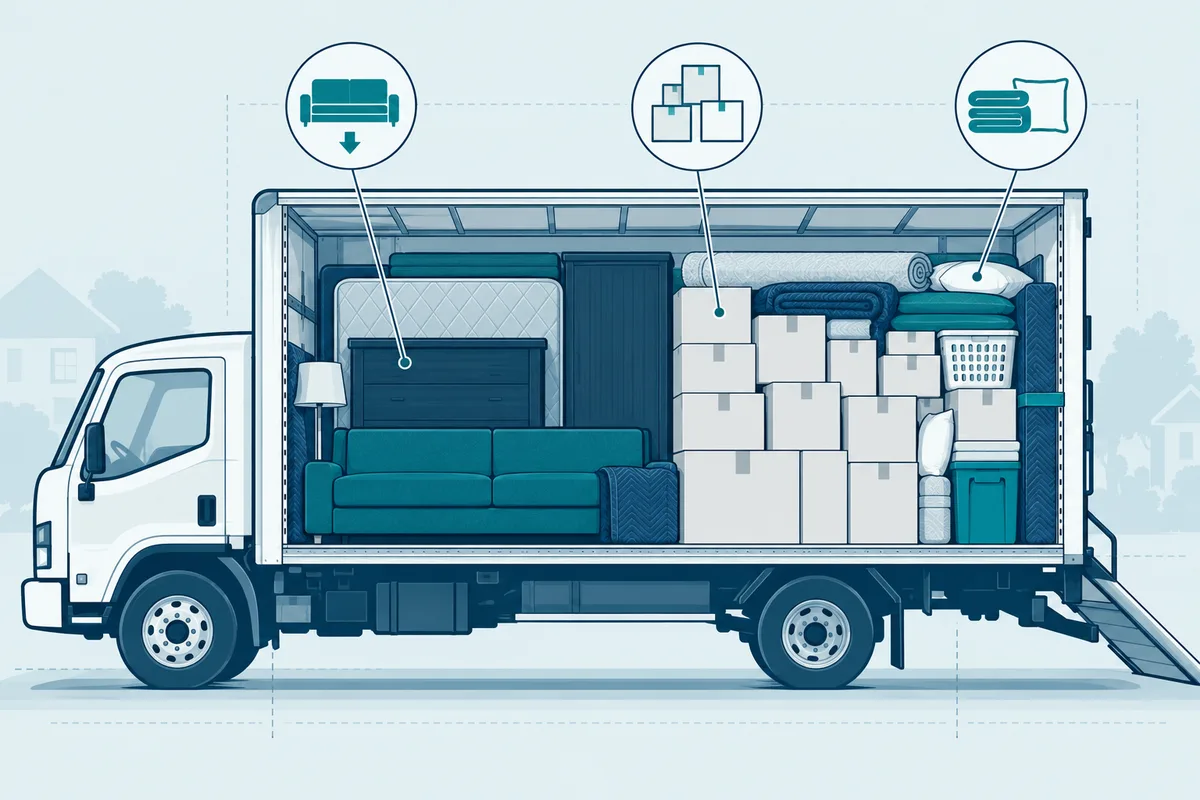
Name the labor you need: load, unload, or both
Tell the coordinator which end needs help. Loading only, unloading only, or both locations. If the job has two addresses, check whether the same crew covers both stops or a separate crew meets you at the destination.
The phrase ‘loading and unloading’ can mean both ends, but your day needs the actual arrangement written down. Compare the loading and unloading offer on the loading and unloading page and the broader labor options on the moving labor page.
Let the rental provider set the vehicle rules
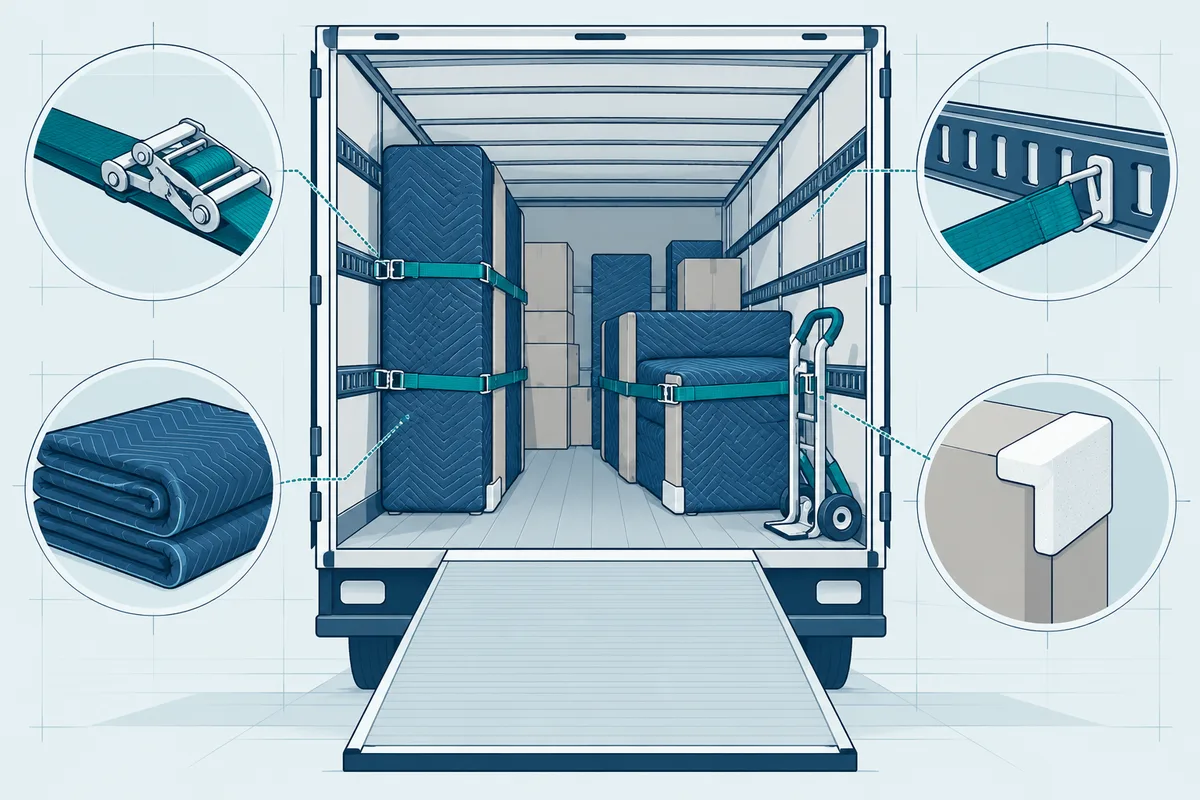
Weight limits, tie-down instructions, prohibited items, and return conditions come from the company that owns the truck or container. A labor crew can place boxes and furniture sensibly, but the provider’s rules always apply.
Before loading day, ask the provider about maximum weight, what must be strapped, which straps are allowed, what cannot go inside, and how the equipment should be returned. Then agree with the crew who supplies compatible straps or pads and who will secure the load. Keep straps coiled or out of walkways while people are carrying items, and follow the provider’s instructions.
Know who brings the truck, pads, and dollies
For full-service local moving, we provide the truck and driver. A labor-only crew works with the vehicle and transportation you arrange.
For labor-only loading, the crew brings moving dollies, furniture pads/blankets, and standard furniture protection. Packing materials are included in the cost of work if the crew is packing for you.
Special tie-downs are a separate question. Confirm before loading day who supplies compatible straps or pads and who will secure the load, then follow the rental provider’s instructions. Keep straps coiled or out of walkways while people are carrying items.
Label every box for the unloading plan
Label by destination room on the top and at least one side. Use ‘fragile’ only for items that truly need extra handling. Tell the crew which boxes should be loaded last so they come off first, and keep your own inventory sheet close to spot a missing box quickly.
Keep medications, documents, chargers, and toiletries in a separate bag that stays with you.
Clear a path and check building access at both ends
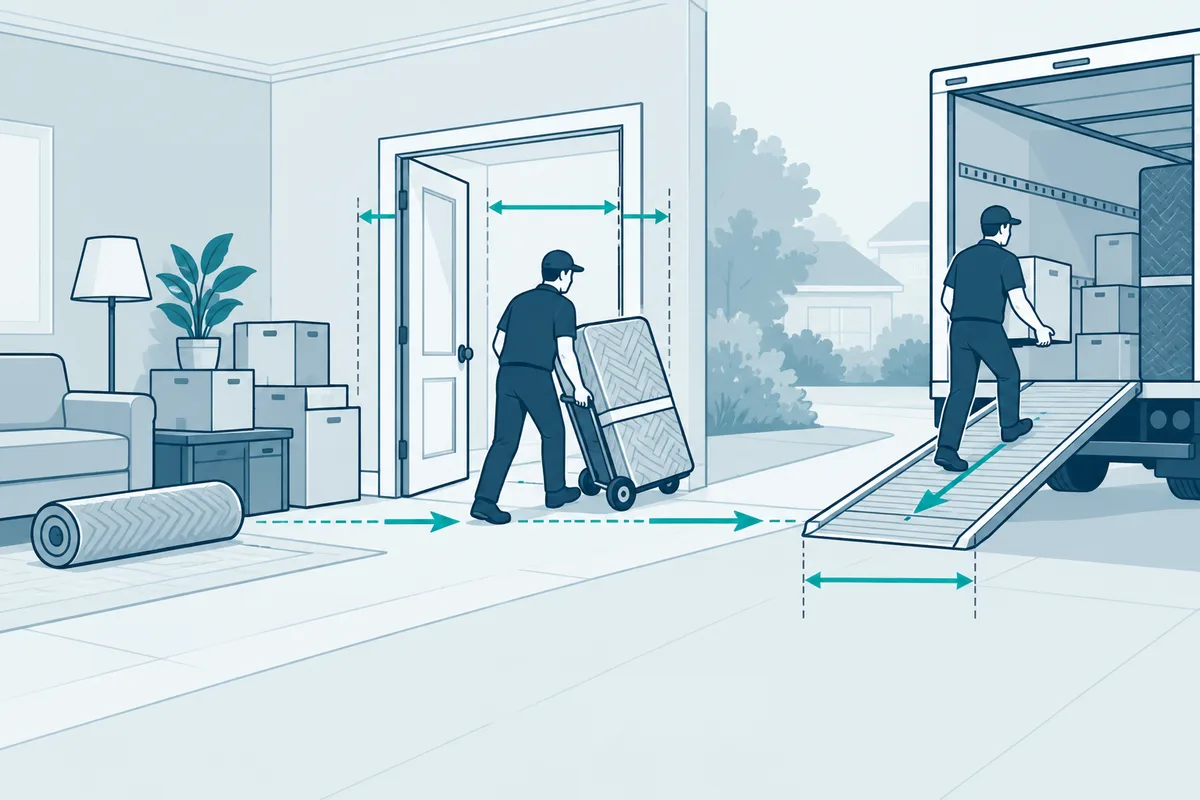
Walk both locations before loading day. Move anything sitting in front of doorways, stairs, or the path to the truck or container. If the destination has a freight elevator or loading dock, ask the building office about reservations and access rules. For a condo or gated community, ask what a driver needs to enter.
Ask the rental provider about vehicle or container dimensions and delivery clearance. Confirm public-street placement or parking with the relevant local authority.
Keep the rental return deadline in view
Rental trucks and containers come with return windows. Ask the rental company for the return time and how late returns are charged, then let the labor crew know you are on a clock.
If the unload takes longer than planned, you can decide early which items matter most. You can ask whether the crew can stay longer, but that depends on the day’s schedule; it is not a promise you should treat as automatic.
The loading-day readiness checklist
- Confirm the labor arrangement: load-only, unload-only, or both ends.
- Ask who brings pads, straps, dollies, and moving blankets.
- Review the rental provider’s weight, securement, and prohibited-item rules.
- Label all boxes by room and identify load-last items.
- Clear doorways, stairs, and the path to the truck or container.
- Ask about freight elevators, loading docks, and parking access.
- Confirm the destination contact has keys and a working phone.
- Know the rental return deadline and late charges.