Start with the building manager
Call the office at both the old and new addresses. Ask for the rules that apply to a resident move, not the general building policy. Useful questions:
- Is there a freight or service elevator, and who reserves it?
- Are move days or hours restricted?
- Does the building have a designated truck spot or loading zone it controls, and is a reservation required?
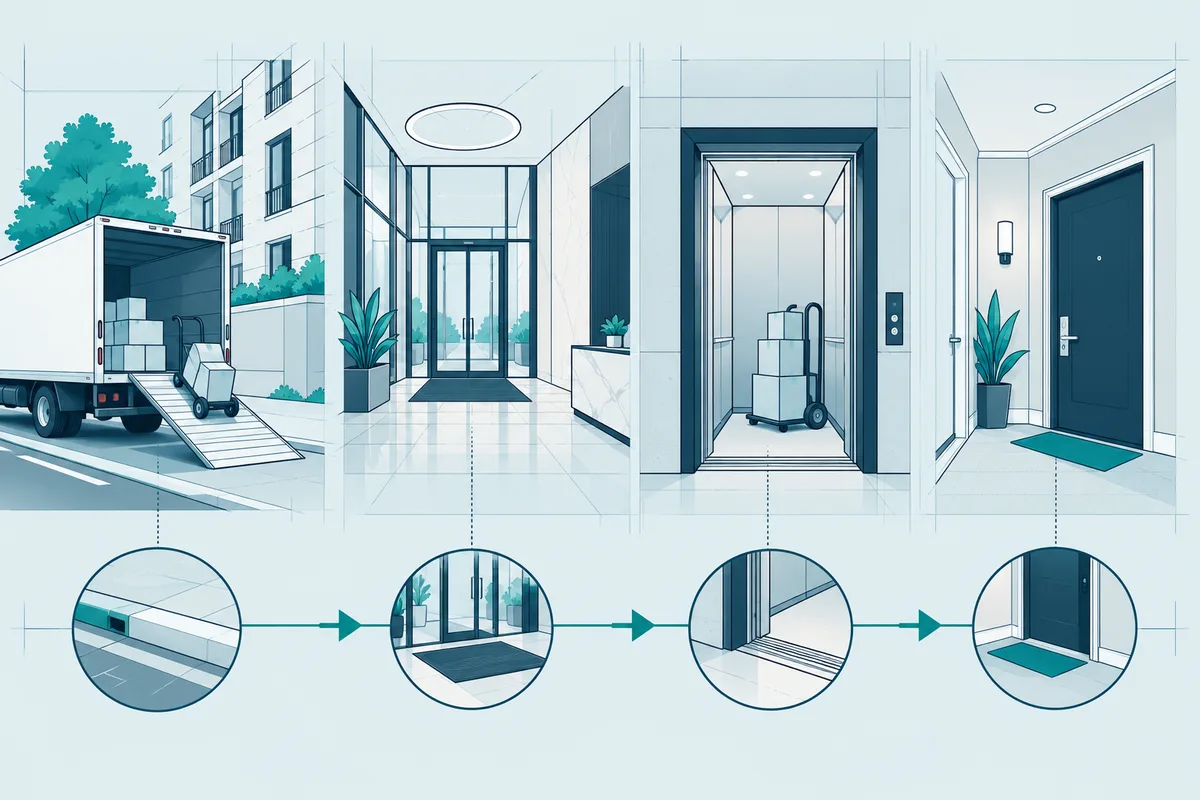
- What route must the crew use from the truck to the unit?
- How does the crew get into the building on move day — key, code, or escort?
Write down the name of the person you spoke with and the date. If two calls give different answers, ask for the written policy.
Street parking is separate: the building manager controls building access, not the public curb. Check posted signs and the city permit rules for the address.
Elevator windows, stairs, and clearance
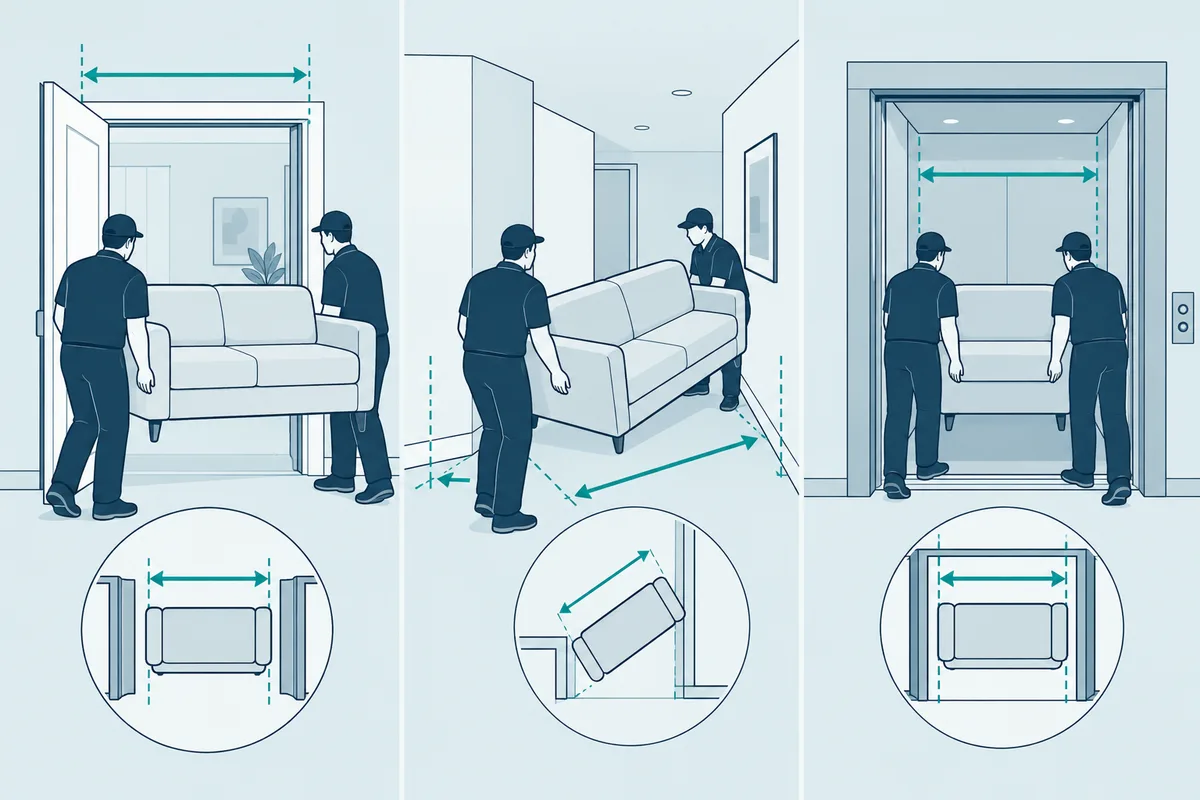
Elevator access is the detail most likely to decide your move window. Ask whether the elevator is attended, whether it must be reserved, and what happens if it goes out of service mid-move. Many buildings expect elevator pads or floor protection; ask what the building requires rather than assuming.
For walk-ups and tight hallways, confirm that the crew may use the stairs and whether stairwell doors lock behind them. Measure the narrowest clear openings and tightest turns along the route. “The sofa fits” is not a measurement — a tape measure gives the crew something to plan against.
Legal parking for the truck
Parking is a separate conversation from building access. Ask the manager whether the building has a designated move spot or loading dock it controls, and how it is scheduled. For street parking, check posted signs and review San Diego’s residential permit-parking rules and maps for the address. A residential permit does not reserve a specific curb space, and building permission alone does not reserve public street parking; check the applicable city process.
Access at both addresses
Moving out of one managed building and into another means two sets of rules. The old building may require move-out notice or elevator time; the new building may want its own reservation, a different loading route, and different parking limits. Contact both offices, then combine the answers into one access note.
Keys, access codes, and move-out photos
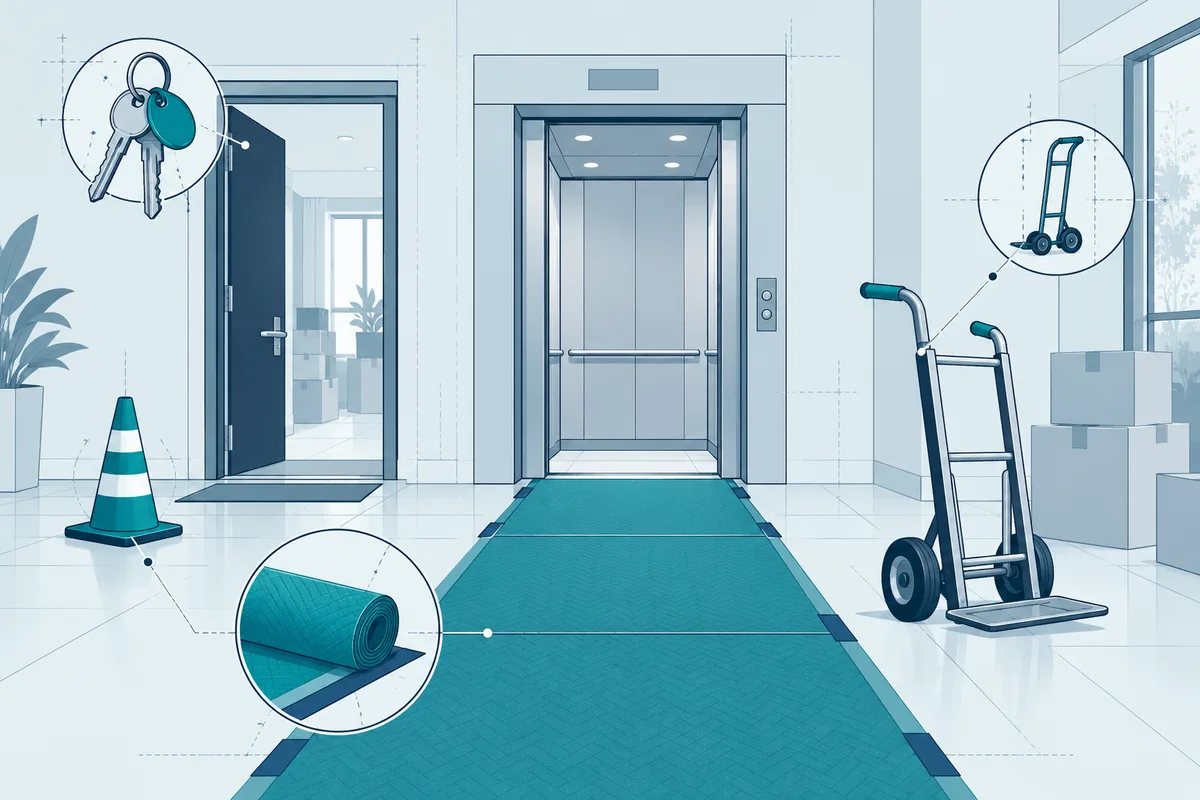
On move day the crew needs a way in. Ask whether you can leave a key or access code with the front desk, or whether you must be present. Confirm that before the crew is scheduled and include it in the access note.
Before anything is loaded, photograph the unit: walls, floors, fixtures, and existing damage. The California Courts security-deposit and move-out guide explains common deposit deductions and the option to request a pre-move-out inspection. It provides general court information, not legal advice. Keep medicine, chargers, documents, and toiletries in an essentials bag outside the boxes.
Example access note
Write a one-page note with the unit number, move window, and building answers. It helps when you cannot be at the new building when the crew arrives, and it keeps the office, the crew, and you on the same page. A simple version:
- Unit: 4B, new address
- Window: June 15, 9:00–11:00 a.m.
- Elevator: freight elevator reserved; service entrance open from 8:45 a.m.
- Route: rear loading door only; lobby and stairs not allowed by building
- Parking: loading zone behind building, reserved until 12:00 p.m.
- Key: left with front desk, labeled with unit number
Use your building’s confirmed details when you write your own; the format matters more than the wording.
Rental truck or the mover’s truck?
Ask the moving company whether the service includes a truck or is labor-only. Transportation is part of the job on a full local move. The customer supplies and transports the vehicle on labor-only jobs. If you are renting, confirm the truck size and ramp with the rental company, then pass those details to the crew so the parking and loading plan match the vehicle.