
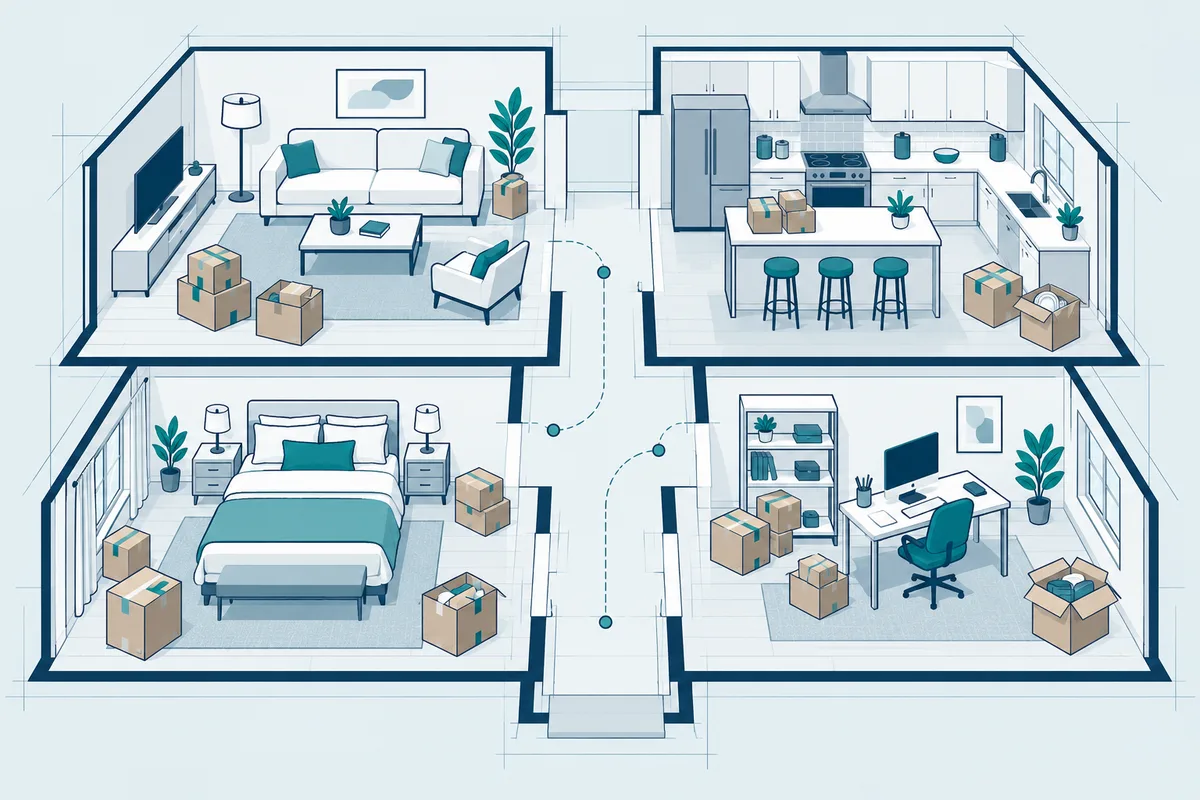
Pick a packing scope: partial or whole-home
Partial packing means you name the rooms. One household asks the crew to pack the kitchen and the china cabinet; another asks for help with a bedroom and home office. Whole-home packing covers the agreed rooms and contents, with personal items and exclusions set aside first. Both approaches are normal, so the question is not which label sounds better.
What matters is writing down the rooms before you ask for help. If the crew packs everything, you still need to gather passports, medications, chargers, and the other things you use daily. If you pack one room yourself, decide whether the crew will still carry those boxes to the truck. Put both decisions on the list.
See how packing and unpacking fits into a larger move on the packing and unpacking page.
Useful room-by-room packing instructions
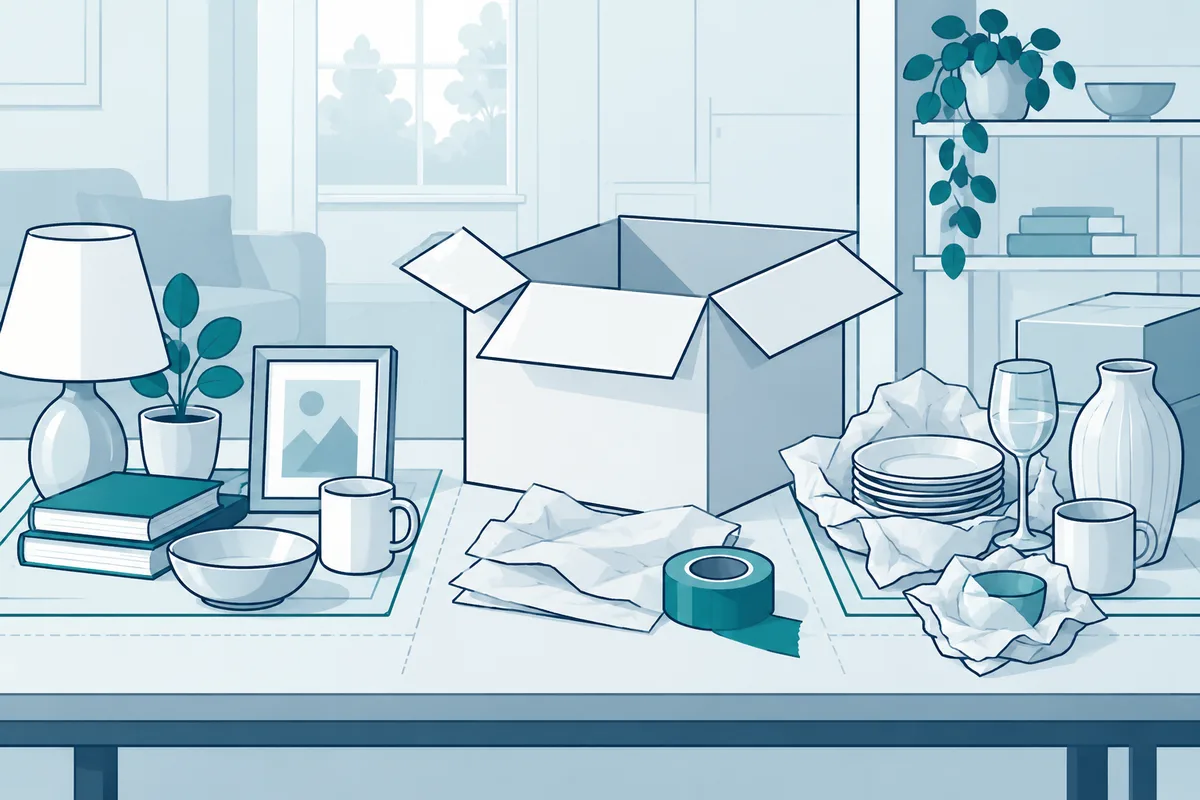
Use the same method whether you ask for partial or whole-home packing. Start with the rooms that have the most fragile or heavy items, and work through one room at a time.
- Kitchen: Use small boxes for heavy dishes, glassware, and pantry items. Wrap plates and bowls in packing paper and stand them on edge instead of stacking them flat. Cushion the bottom and sides of each box, fill gaps so nothing shifts, and tape the box shut.
- Bedroom: Pack books flat in small boxes and keep each box light enough to carry. Use wardrobe boxes for clothes that stay on hangers. Empty heavy dresser drawers or pack them separately, and keep hardware in a labeled bag with the matching piece, without applying tape to delicate finishes.
- Living room: Cushion electronics, framed glass, and mirrors on both sides. Coil cords and label them, or photograph the back of the TV and entertainment stand before unplugging so reconnecting is easy. Put remotes and small parts in one labeled bag.
- Home office: Back up computer files before you unplug anything. Pack cables, chargers, and external drives together in one clear bag. Keep passports, medications, glasses, and important documents out of the general load and carry them with you.
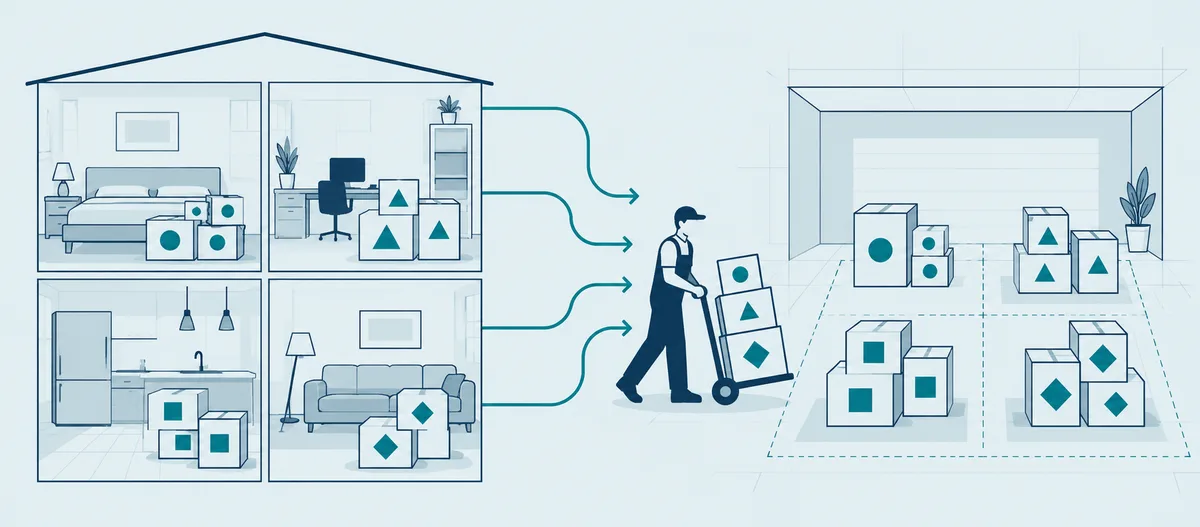
Label each box with the destination room on the top and at least one side. Use “fragile” only for items that truly need extra handling, and point those boxes out to the crew before loading.
Packing materials are included
Boxes, tape, packing paper, bubble wrap, and markers are part of the packing job. When our crew packs for you, packing materials are included in the cost of work; you do not need to buy them or track them as a separate charge.
If you prefer to use your own boxes or handle some rooms yourself, tell the coordinator. The estimate is based on the rooms listed for packing, and the crew brings packing materials for those rooms.
Mark fragile items and keep one essentials bag
Make a fragile list ahead of time: mirrors, framed glass, ceramics, instruments, and monitor screens. You do not need to list every dish, but do point out locations that need extra care before the crew starts.
Pack your own essentials separately: medications, chargers, documents, toiletries, and a change of clothes. That bag stays with you and does not go into the general load. It saves you from digging through boxes the first evening.
Unpacking means taking items out of boxes
Unpacking gets items out of boxes and into place. Carrying sealed boxes to the right room is delivery or placement work, not unpacking. Before the job, be clear which one you want: boxes placed in the room only, or boxes opened and items put onto shelves and counters.
Confirm that decision in writing with the rest of the moving scope. An estimate is a starting point, not a confirmed booking.
The short checklist for your packing day
- Which rooms get packed, and which items stay unpacked?
- Are there heavy or fragile items the crew should know about?
- Will finished boxes be sealed and labeled by room?
- Do you want boxes opened at the destination, or just placed in the room?
- Who moves packed boxes to the truck or container?
Packing materials are included when our crew packs for you. Tell the coordinator if you plan to use your own boxes.